
How Motorola STEMSpark surrounds technology with sustained learning, teacher capability and opportunities to create
Supporting India’s National Education Policy 2020 and Lenovo’s vision of Smarter Technology for All
A student can learn about circuits from a textbook. But when that student connects the components, tests an idea, finds that it does not work and tries again, the lesson changes. It becomes an experience of curiosity, persistence and creation.
For many students in government schools, especially girls and first-generation learners from underserved communities, opportunities to explore artificial intelligence, robotics, coding and electronics through practical experimentation remain limited. Motorola STEMSpark was created to help close that gap.
The programme begins with a dedicated STEM innovation lab, but it is designed to go further. Implemented by Tarq Foundation, STEMSpark surrounds the technology with curriculum-linked sessions, dedicated trainers, teacher capacity building, student STEM Clubs, projects, masterclasses, competitions and ongoing measurement. What defines the approach is not only what is installed in the classroom, but what happens around the lab and how capability is built within the school.
Access → Experience → Capability → Confidence → Opportunity
Why a lab alone is not enough
A well-equipped space can create possibilities, but equipment does not automatically create learning. Technology can remain underused when teachers lack the time or confidence to facilitate practical activities, when sessions are disconnected from the curriculum, or when students have no continuing pathway beyond an initial demonstration.
STEMSpark is designed as a learning ecosystem rather than a stand-alone installation. Dedicated STEM trainers conduct grade-appropriate sessions. Teachers build the skills to facilitate activities themselves. STEM Clubs support peer learning beyond scheduled classes. Masterclasses, practical projects and inter-school competitions give students reasons to apply, improve and showcase what they have learned.
This combination is intended to move students from occasional exposure to sustained participation, and schools from receiving a lab to developing greater ownership of how it is used.
Turning the intent of NEP 2020 into practice
India’s National Education Policy 2020 calls for education that is experiential, inquiry-driven, multidisciplinary and supported by technology. STEMSpark brings those principles into a practical school setting.
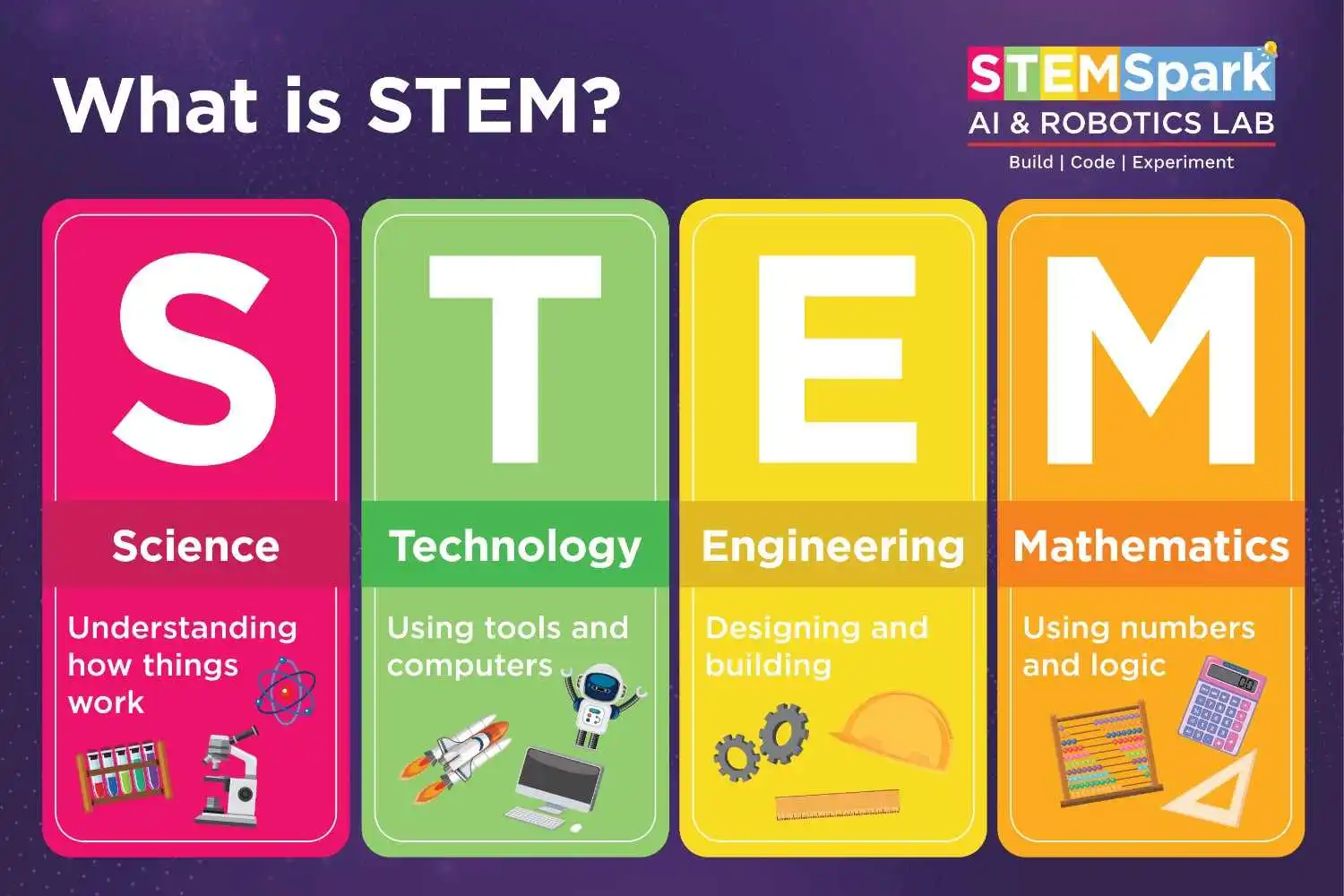
A concept introduced in science or mathematics can become a sensor to test, a robot to programme, a circuit to build or a problem to solve. Students move between disciplines and, importantly, from knowing to doing. Through project-based learning, they are encouraged to ask questions, test ideas, collaborate, learn from failure and improve their designs.
The goal is not simply to teach students how a technology works. It is to help them see themselves as people who can use, question and create with it.
Creating spaces where students can build
The first phase established seven AI and Robotics Labs in government schools across Gurugram, Mumbai and Bengaluru. These schools have a combined listed enrolment of 4,560 students, creating an initial foundation for experiential STEM learning across three cities.
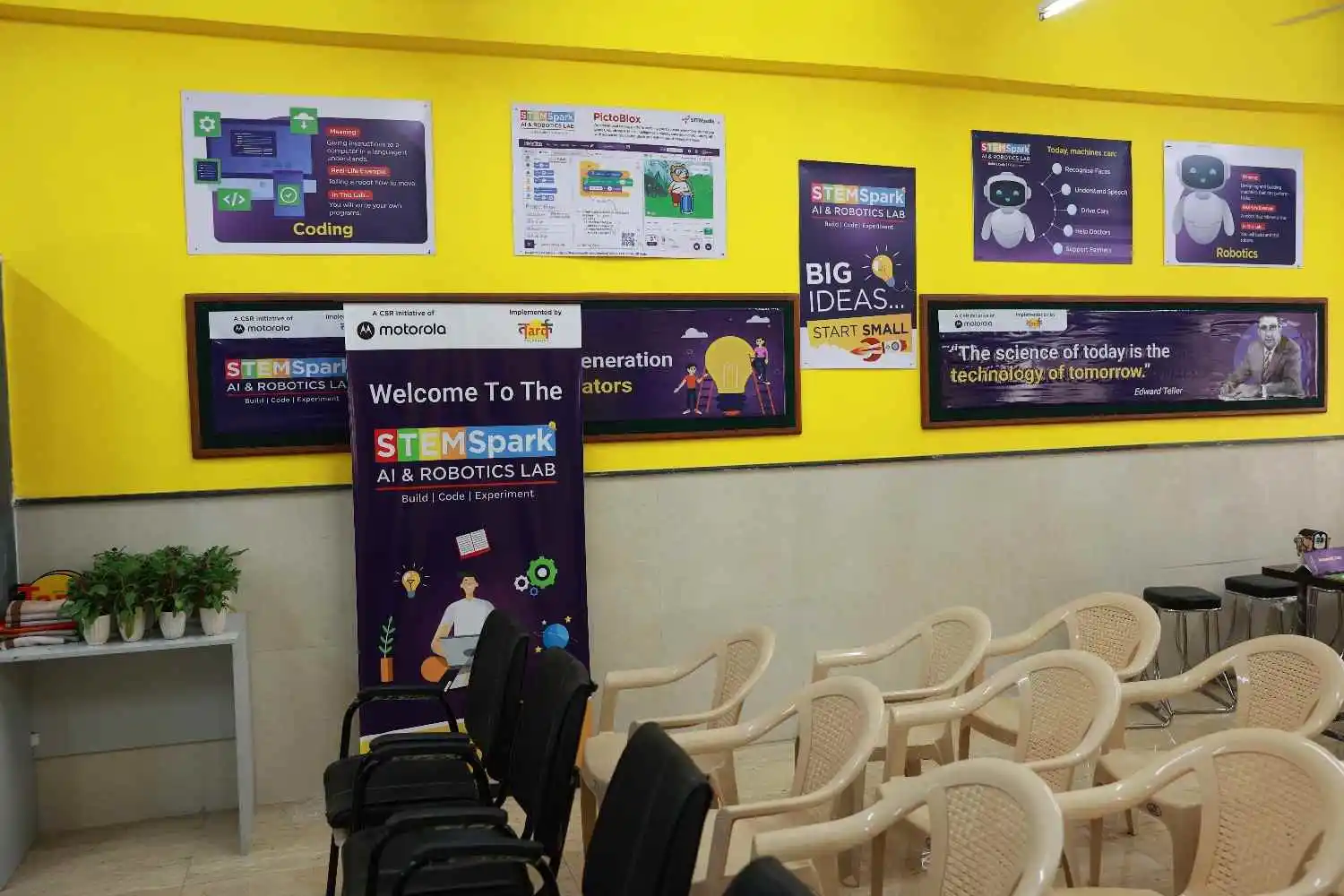
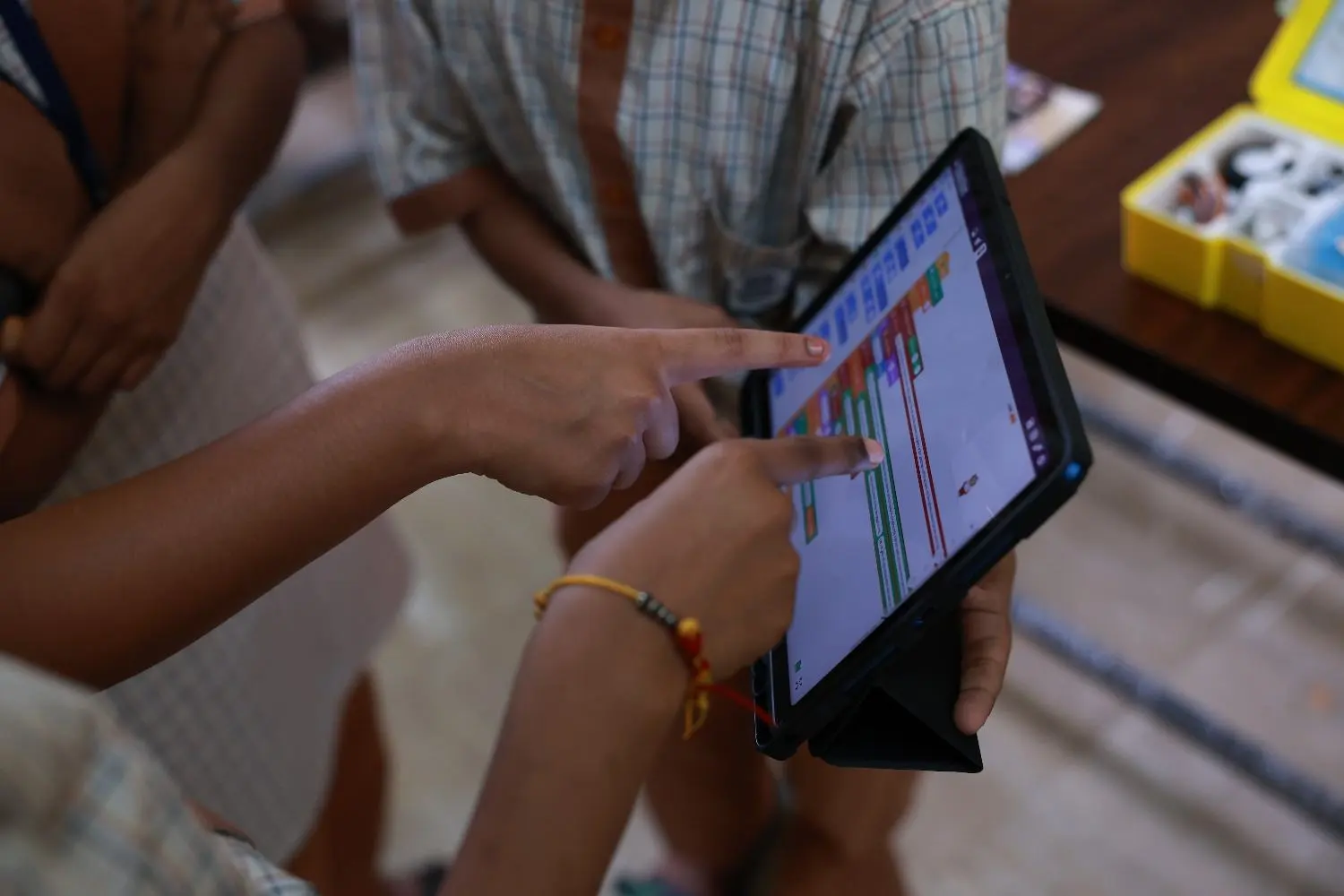
Each lab brings together coding-enabled tablets, robotics kits, sensors, electronics components, AI-enabled learning tools and prototyping materials. Refurbished classrooms provide students with a place where abstract concepts can become working models and where mistakes are treated as part of the learning process.
Dedicated trainers connect these resources to grade-appropriate, curriculum-linked learning for students in Grades 6 to 10. The technology is therefore not presented as an isolated activity. It becomes a tool through which students can explore scientific principles, engineering thinking, creativity and collaborative problem-solving.
From student access to school ownership
Giving students access to sophisticated technology is important. Building the capability within a school to keep that technology in use is what can make the opportunity last.
STEMSpark therefore works with teachers as well as students.Training-of-Trainers programmes are designed to build teachers’ confidence in facilitating practical STEM activities and integrating the lab into the school’s learning environment. As teacher capability develops, schools can take greater ownership of lab utilisation rather than depending indefinitely on external support.
Student STEM Clubs add another layer of continuity. They provide a space for learners to explore ideas, support one another and continue building beyond scheduled sessions. Competitions and project showcases create milestones that make learning visible and give students an opportunity to explain not only what they built, but how they solved the problem.
Expanding access while deepening engagement
The next phase proposes 10 additional labs in Lucknow and Pilibhit, taking STEMSpark’s planned footprint to 17 government schools across five cities and extending access to more than 13,000 students.
The expansion is intended to deepen engagement, not simply replicate infrastructure. Dedicated trainers, teacher capacity building, STEM Clubs, masterclasses, practical projects and inter-school innovation competitions will create multiple pathways for students to participate and progress.
Particular attention is given to girls and learners from underserved communities. Early exposure, encouragement and visible opportunities to create can help challenge assumptions about who belongs in science and technology, while giving more students the confidence to imagine further study and careers in STEM.
Measuring the journey from output to outcome
STEMSpark’s immediate outputs are visible: functioning labs, trained teachers, structured sessions, STEM Clubs, projects, masterclasses and competitions. But the programme’s purpose is not measured by the presence of equipment alone.
Participation records and lab-utilisation data are intended to show whether students are using the opportunity consistently. Baseline and endline assessments are designed to track emerging changes in foundational STEM understanding, digital literacy, scientific curiosity, creativity and problem-solving. Teacher participation and ownership will help indicate whether practical STEM learning is becoming part of the school ecosystem.
The longer-term outcome is a shift in confidence and possibility: students who are more willing to ask questions, more comfortable experimenting with technology and better able to imagine themselves as creators, problem-solvers and future participants in India’s technology economy. These outcomes will need to be demonstrated through programme evidence as implementation progresses.
Smarter Technology for All begins with the ability to create
Lenovo’s vision of Smarter Technology for All is not only about making advanced technology available. It is about enabling more people to understand it, use it and shape what comes next.
For a student, that journey may begin with access to a tablet, sensor or robotics kit. Access becomes meaningful through hands-on experience. Experience builds capability. Capability can build confidence. And confidence can expand a young person’s sense of what is possible.
From seven foundational labs to a proposed network of 17 learning environments, Motorola STEMSpark is moving from access to capability and from infrastructure to school-based ownership. By combining technology with teaching, participation and sustained learning, the programme supports the ambitions of NEP 2020 while helping government-school students become active participants in India’s technology future.
Because the future of technology belongs to everyone, every student should have the opportunity not only to use it, but to help shape it.
About the programme
Motorola STEMSpark is a social-impact initiative implemented by Tarq Foundation in government schools, which is being scaled across key districts. The programme combines hands-on STEM infrastructure, curriculum-linked experiential learning, dedicated trainers, teacher capacity building, student STEM Clubs, innovation opportunities and ongoing monitoring to expand access to future-ready education.
Disclaimers, Sources and data notes
Motorola STEMSpark
Motorola STEMSpark programme and award-submission documentation: Programme design, implementation model, school locations, lab equipment, listed enrolment, proposed expansion, planned reach and monitoring approach.
India’s National Education Policy 2020: Policy direction on experiential, inquiry-based, multidisciplinary and technology-enabled learning.
Programme monitoring framework: Participation records, lab-utilisation tracking, baseline and endline assessments, and regular reviews intended to assess outputs and emerging outcomes.
Editorial note: The seven existing labs and combined listed enrolment of 4,560 students are current programme figures. The 10 additional labs, 17-school footprint and reach of more than 13,000 students are proposed figures for the next phase and should remain clearly described as planned until implementation is confirmed. The article describes what defines the STEMSpark approach without claiming it is unique among all tinkering-lab programmes. Longer-term outcome and impact claims should be updated as baseline, endline and utilisation evidence becomes available.